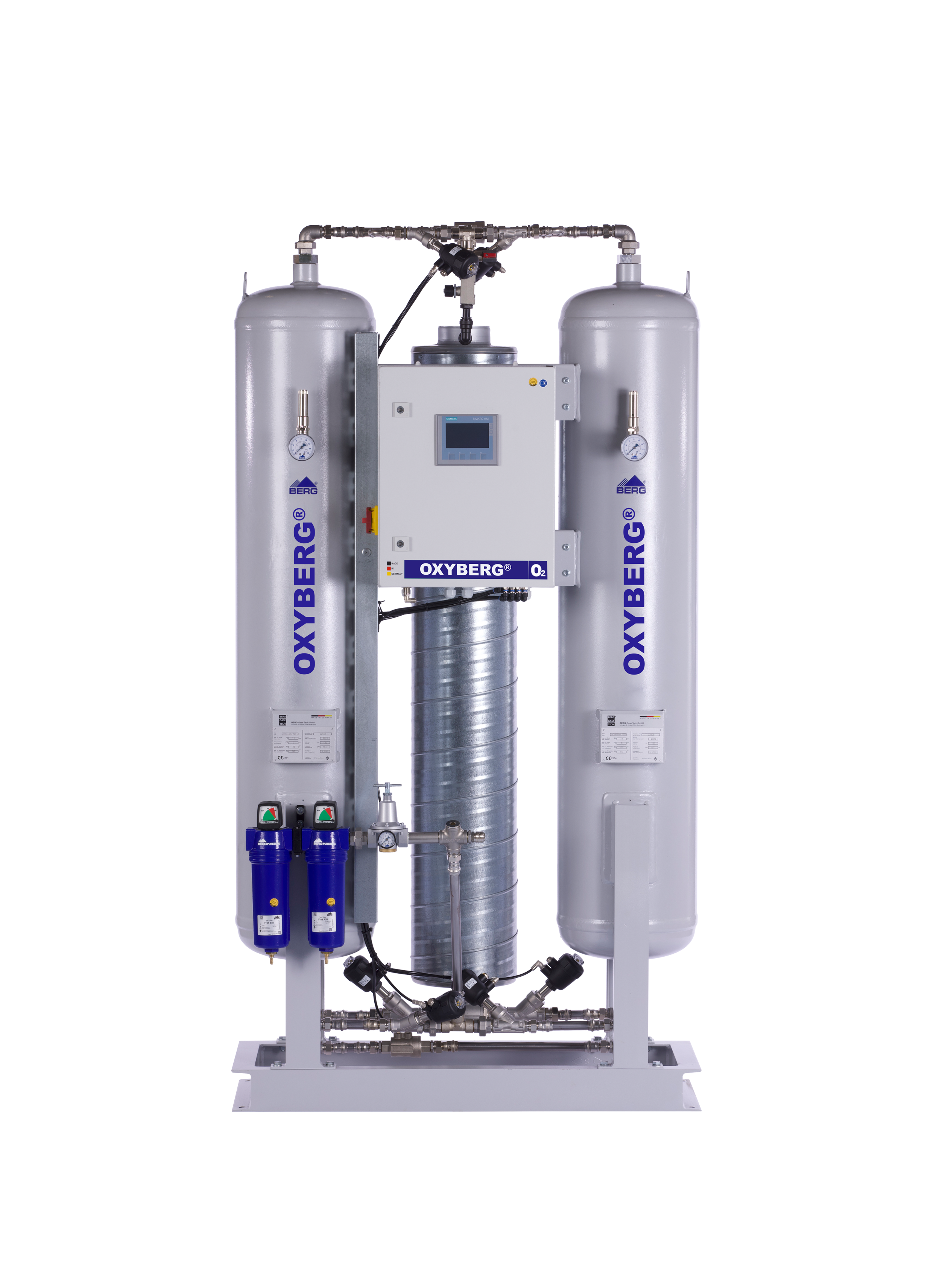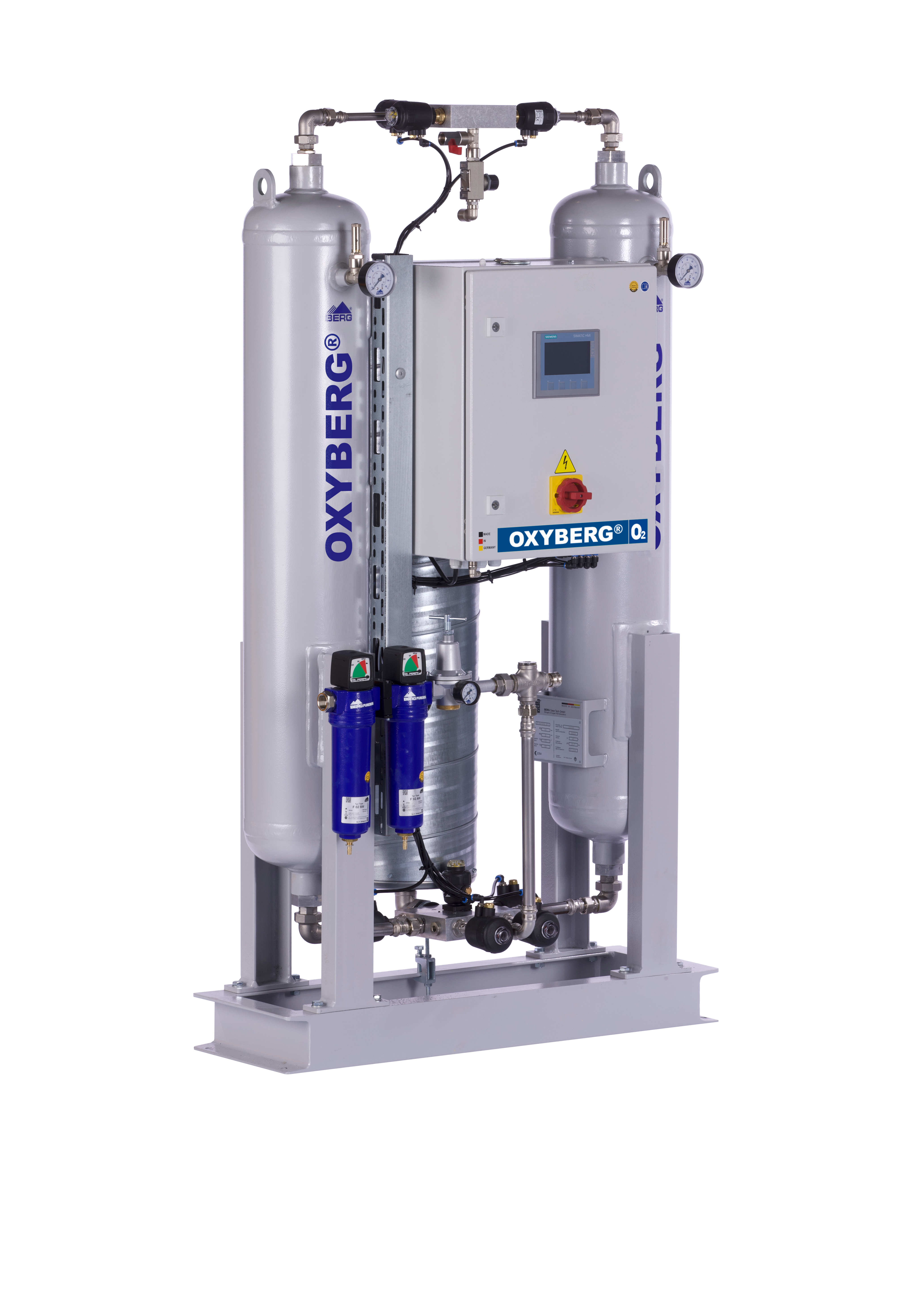
Product information "OXYBERG® 800 Oxygen Generator "
Oxygen Generator OXYBERG® 800
| Purity | 90% | 93% | 94% | 95% |
| O2 Nm3/h | 6.3 | 5.5 | 5.2 | 4.9 |
| Comp. air Nm3/h | 69.3 | 60.5 | 57.2 | 53.9 |
BERG Oxygen Generator OXYBERG 800 – an Efficient Solution for Water Treatment
The BERG OXYBERG 800 Oxygen Generator is highly suitable for water treatment. With its reliable oxygen production, it effectively supports the oxidation of impurities, ensuring clean and safe water for various industrial applications.
BERG oxygen plants are suitable for many different applications: clinics, biogas plants, cutting, welding, wellness, beauty, hospitals, fish farming, aquaculture, pharmaceuticals, the food industry, and diving.
The OXYBERG 800 Oxygen Generator is not only ideal for fresh water treatment but can also be effectively used in wastewater treatment. By introducing oxygen, the biological degradation performance in treatment plants is enhanced, leading to more efficient cleaning. For further information about applications in wastewater treatment, please refer to the OXYBERG 900 Oxygen Generator.
Using a PSA Oxygen Generator for Water Treatment
Using an industrial PSA oxygen plant for water treatment offers several advantages, including:
- Oxidation: You can use oxygen generators to add oxygen to water treatment. This helps remove substances like iron, manganese, and hydrogen sulfide. The addition of oxygen enhances chemical reactions, making the water cleaner and safer to use.
- Biological Treatment: Oxygen compressors are essential for supporting aerobic biological treatment processes in wastewater treatment plants. Using oxygen production plants helps aerobic microorganisms like bacteria grow and work more efficiently, breaking down organic matter and pollutants in water.
- Aeration: You can use oxygen generators to add oxygen to lakes, ponds, and reservoirs. This improves water quality for fish and other aquatic life. Aeration introduces oxygen into the water column, increasing dissolved oxygen levels, reducing stratification, and preventing the buildup of harmful gases like hydrogen sulfide.
- Disinfection: An oxygen generator can help disinfect water and remove harmful substances through advanced oxidation processes (AOPs). Oxygen can be used to create ozone or hydroxyl radicals, which break down pathogens, pharmaceuticals, and other pollutants in the water.
- Cost-Effectiveness: Producing oxygen onsite with oxygen generators can be more cost-effective than relying on traditional oxygen supply methods, such as liquid oxygen tanks or cylinders. By eliminating the need for oxygen cylinders and tanks, water treatment facilities can save on transportation costs, reduce reliance on external suppliers, and ensure a continuous and reliable oxygen supply for treatment processes.
- Environmental Sustainability: Using oxygen generators for water treatment can contribute to environmental sustainability by reducing energy consumption and carbon emissions associated with traditional oxygen supply methods. Onsite oxygen production eliminates the need for transporting oxygen cylinders or tanks, promoting a more sustainable approach to water treatment operations.
Using an oxygen generator for water treatment offers benefits such as:
- Enhanced oxidation
- Support for biological treatment processes
- Improved aeration
- Disinfection capabilities
- Cost-effectiveness
- Environmental sustainability
Incorporating oxygen generators into water treatment systems can help improve water quality, enhance treatment efficiency, and support sustainable water management practices.
Industrial Oxygen Generators for Drinking Water Treatment
Oxygen generators can play a crucial role in drinking water treatment by supporting various processes that improve water quality and ensure safe drinking water. Here are some ways in which oxygen generators can be used in drinking water treatment:
- Oxidation of Contaminants: You can use an oxygen generator to add oxygen to water treatment, helping remove substances like iron, manganese, and hydrogen sulfide by converting them into forms that can be easily filtered out or treated.
- Aeration: An oxygen generator can support aeration processes in drinking water treatment plants to enhance dissolved oxygen levels in water. Adequate dissolved oxygen is important for maintaining the health of aquatic life, supporting biological treatments, and eliminating unpleasant tastes and odours in water.
- Disinfection: Oxygen generators can be used in special processes to clean drinking water. They produce ozone or hydroxyl radicals that kill germs and viruses in the water, ensuring it is safe to drink.
- Biological Filtration: Oxygen generators can provide oxygen to support biological filtration processes in drinking water treatment systems. Aerobic microorganisms rely on oxygen to break down organic matter and contaminants in the water, improving water quality and reducing the risk of microbial contamination.
- Ozone Generation: Some oxygen units are capable of producing ozone, a powerful oxidising agent used for disinfection in drinking water treatment. Oxygen-generated ozone can be injected into water to destroy pathogens, bacteria, and viruses, providing additional protection against waterborne diseases.
- pH Adjustment: An oxygen plant PSA can help adjust pH levels in drinking water treatment. Oxygen is added to water, triggering chemical reactions that balance the pH. Maintaining the correct pH balance is essential for ensuring the effectiveness of disinfection processes and preventing corrosion in distribution systems.
- Mixing and Circulation: Oxygen generators can support mixing and circulation in drinking water treatment systems, ensuring uniform oxygen distribution throughout the water. Proper mixing helps optimise treatment processes, improve the efficiency of disinfection methods, and enhance overall water quality.
By incorporating PSA oxygen generators into drinking water treatment processes, water treatment plants can enhance treatment efficiency, improve water quality, and ensure the delivery of safe and clean drinking water to consumers. The versatile applications of oxygen generators make them valuable tools for addressing various challenges associated with drinking water treatment.
For smaller capacity requirements, we recommend the OXYBERG 700 Oxygen Generator. For larger capacities, especially suited for wastewater treatment, the OXYBERG 900 Oxygen Generator is ideal. Explore our full range of oxygen generators for various applications.
| Oxygen Generator | OXYBERG® 800 |
| Part No. | 1020100800 |
| Capacity (95%) | 4.9 Nm3/h |
| Capacity (93%) | 5.5 Nm3/h |
| Dimensions | 650 x 1070 x 2000 LxWxH (mm) |
| Design pressure | 11 bar |
| Operating pressure | 7 bar |
| Net weight | 490 kg |
| Noise level | 55 max 85 dB (A) |
| Ambient temperature | +5 to +40 °C |
| Electrical connection | 230V 50Hz 110V 60 Hz |
| Power consumption | 150 W |
| Safety class | 54 IP |
| Inlet Filtration ** | 0.01 micron |
| Inlet filtration ** (Active carbon filter) | 0.003 micron |
| Outlet Filtration ** | 3 to 5 micron |
| Temperature * | 25 ° C |
| Above Sea Level * | 0 m |
| Pressure * | 1.0133 bar |
| Humidity * | 70% |
| * Consult us for performance under other specific conditions ** Optional |
|
Accessories
All articles in this group